
Training Centers
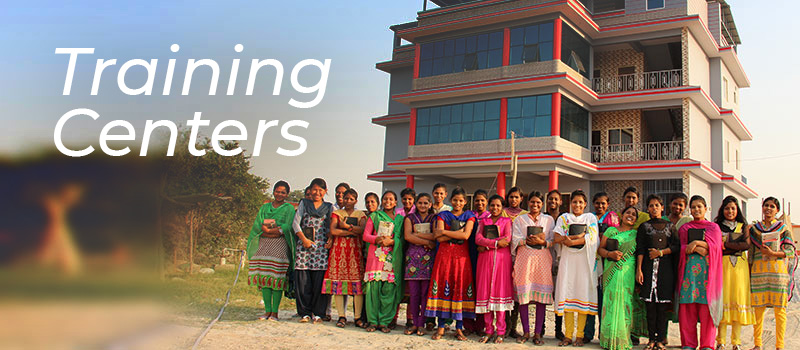
Our Training Center initiative is educating and equipping Indigenous women leaders in India with the life and vocational skills they need to create sustainable progress for their own communities. Since our start in 1998, we have served thousands of women through our one-year program for Indigenous leaders where they are equipped with tangible job skills and powerful leadership training. After completing the program, these women are trained to reach their local community and start women’s groups. These groups offer a unique support system and opportunity to teach other women essential skills – from basic education to hygiene to financial literacy to tailoring to agriculture – so that they are able to exercise their agency and independence.
- Local young women who are dedicated to becoming change-agents for their communities undergo a one-year training in order to step into leadership roles within their communities and surrounding regions.
- They learn through an exclusive training program as well as collaboration with their classmates, and are encouraged to apply the lessons and teachings to their own lives since community transformation begins with personal transformation.
- The ultimate goal is for all trainees to become change-makers to better society in their regions. 209 women graduated in 2020 equipped to serve and transform their communities.
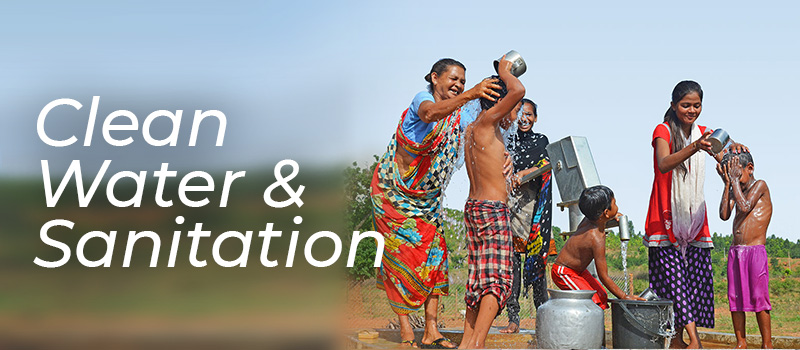
Access to clean water and safe sanitation facilities is one of the most effective ways to save lives and bring hope to a community. In rural India, access to clean water is extremely limited. ICFP is committed to helping address this by empowering local leaders and families with access to clean water and safe sanitation practices. To date, we are impacting 114,827 people every day in 918 remote villages in North India. So far, we have completed and dedicated 401 bore wells to serve marginalized and underprivileged people groups and we’ve constructed 245 toilets and 29 urinal facilities across 7 states.
- Sanitation: We work with local teams to build “toilet blocks” in highly trafficked areas. A toilet block is usually made from cement and has 4-5 toilets or urinals on one side and then sinks for hand washing on the other side. Bringing these facilities to the center of the community helps normalize safe sanitation practices and make them accessible for people from all walks of life. In partnership with the Indian government, ICFP is installing eco-friendly, socio-culturally acceptable, and economically affordable toilets all over northern India.
- Clean Water: With issues such as extreme drought, over-population and a lack of sanitation in many rural areas, there is a scarcity of safe drinking water for more than a hundred and fifty million people in India. We are committed to drilling deep tube bore wells across the North and Eastern states of India where chronic drought exists, bringing life-saving clean water to these communities.
Clean Water & Sanitation
Education
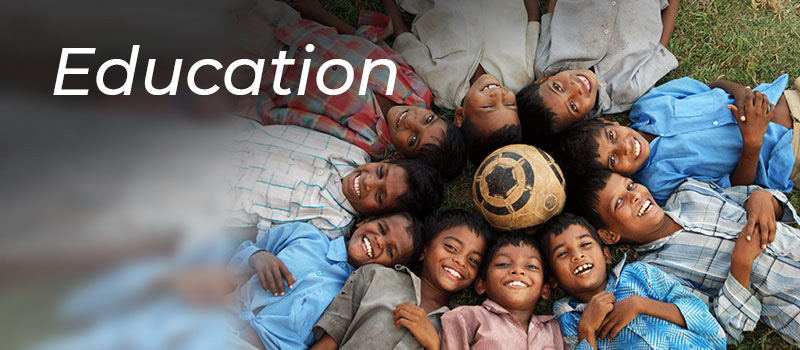
We are pioneering a model of empowering and equipping local Indigenous leaders to bring equal access education opportunities to marginalized children in the lower castes of northern India. Freeing a child from the abusive cycle of child labour and poverty and giving them access to quality education is the single most powerful and sustainable way to transform communities.
So far, ICFP has empowered community leaders to establish twelve village primary schools and a government-accredited teacher’s college in northern India to bring access to high quality education to remote communities. Through this model of investing in both local teachers and students, ICFP is helping lead the way in sustainable, local-led community development and educational programs:
- Teachers Colleges: At the teachers college, Indigenous leaders are trained and equipped to serve in rural areas, bringing quality education to children in their own communities.
- Schooling: All ICFP schools offer quality education regardless of gender, caste, or religion. They provide for both fee-paying students and disadvantaged children from lower socio-economic homes through scholarships.
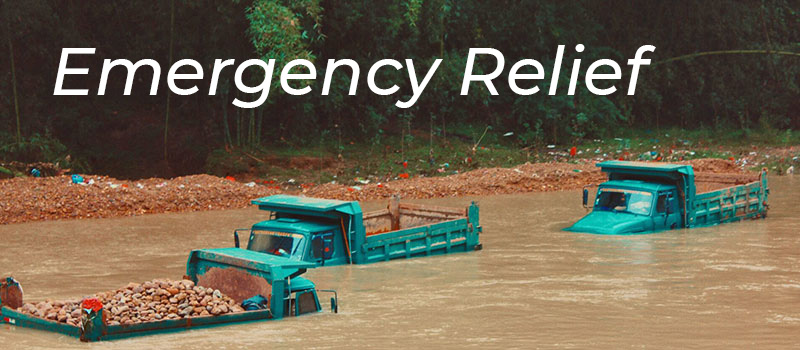
Alongside community partners, ICFP has worked to provide emergency assistance and humanitarian relief during times of crisis for underserved communities in India. This support looks like providing on the ground assistance and emergency aid in slums and communities of people in the lower castes. These families live hand-to-mouth and a natural disaster or emergency makes survival, which was already a daily struggle, nearly impossible. We work with local leaders to bring emergency aid to families affected by floods, the pandemic, or other disasters.
- Flood Relief: Monsoon seasons often trigger torrential flooding and landslides all around India. An estimated 6 million people are affected each year. The impact this has on those communities is devastating. Empowered by our global community’s generosity, we have given out 450 emergency ration packs to date and have helped move people to safety. Our current urgent need is to help our field workers and the poorest people in our communities rebuild their homes and livelihoods.
- Pandemic: During the pandemic, we helped equip local leaders distributing emergency food packets to people experiencing homelessness or mental illness, to patients in hospitals facing food shortages, and to marginalized families living in slums. We also helped provide education around the vaccine, crisis counseling, social distancing, and important sanitation practices like hand washing.
Emergency Relief
Healthcare
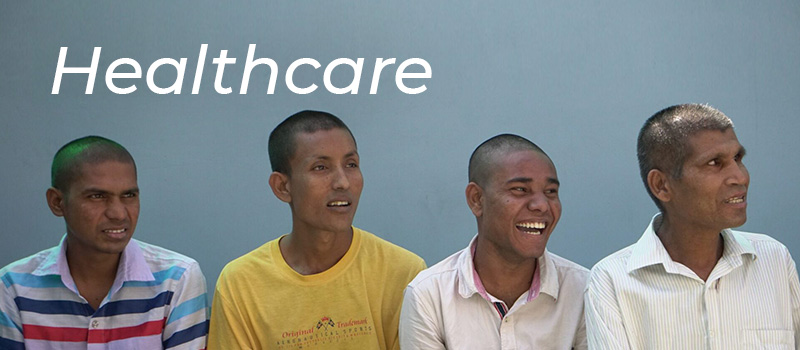
Every day, I Care For People is developing a path of hope for people in some of the most rural and under-resourced communities in India dealing with mental health issues. We have the vision to empower a world where people care for other people by bringing a voice of hope every day, everywhere in the world. Our community-led mental health program cares for the body and minds of people who have been rejected and abandoned due to stigmatization around mental illness.
One of our key Covid-19 response initiatives has been establishing counseling and mental health programs for those who can no longer bear the weight that the virus has had on their families. To combat the impacts of isolation, ICFP launched mental health trainings, which proved to be extremely valuable to our workers in the field, as well as the communities they serve.
500 social workers were equipped through this program, and now these leaders can now pass on what they have learned to others working with them. The goal is to have every field worker equipped with this training in the future, so that they are able to provide real help to the villages who have suffered significant emotional and mental impact from the devastation of the pandemic.